
One poor response is not the whole environment.
Avoid approaching immediately after games, during tournament weekends, or in front of players and parents. Give a calm process and specific feedback time to work.
Coach conversation prep
Observe patterns, separate emotion from evidence, and ask development-focused questions that create clarity.
Before contacting the coach
Parents care deeply, so unclear feedback, changing roles, or reduced minutes can feel urgent. Acknowledge the emotion, then gather calm facts across multiple sessions.
Pause after one game. Prepare when a pattern is clear.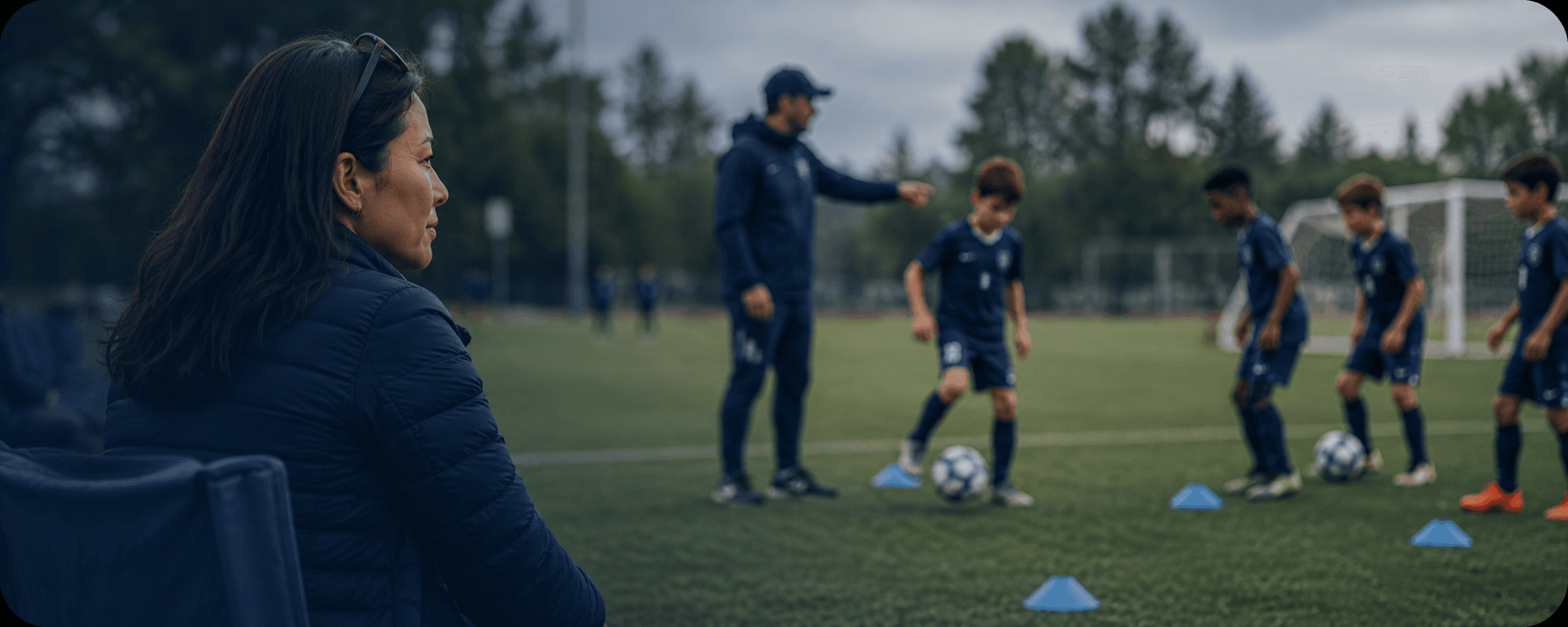
Conversation sequence
Move calmly from observation to follow-through. Each stage should reduce guessing—not win an argument.
Observe
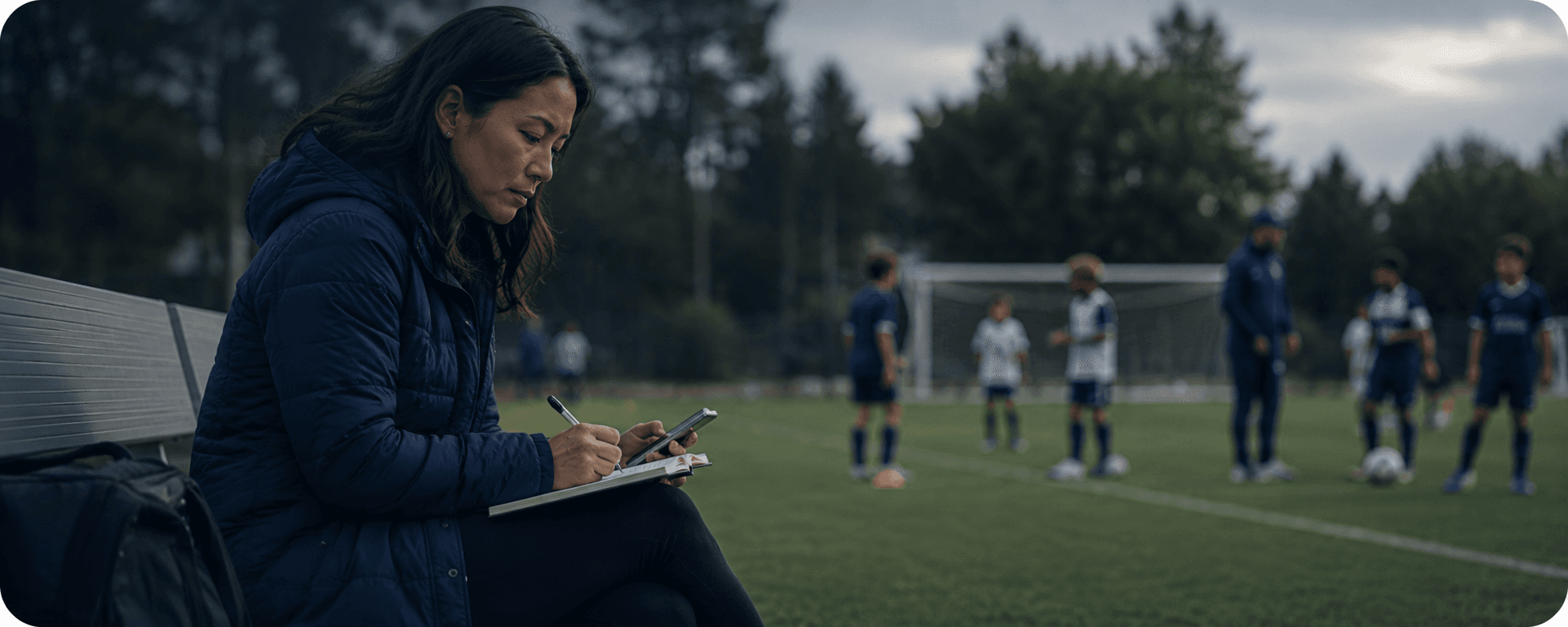
Look across multiple games and trainings. Note what happened, how often it happened, how your child responded, and what feedback the coach has already given.
Prepare
Write a short concern summary and choose two or three questions. Ask for a scheduled 10–15 minute conversation; avoid post-game approaches, public discussions, tournament-weekend pressure, and long emotional text threads.
Ask
Start with curiosity. Ask what the coach sees, what the player should improve, how training habits or team needs affect the role, and what progress would look like.
Listen
Listen for specific feedback about training habits, technical or tactical development, current role, fitness, performance, team needs, and the right level of challenge.

Follow Up
Document the feedback, write the two or three agreed focus areas, clarify what the player owns, and review the pattern again in three to four weeks.
Observation / clarification field
Feelings and questions are valid. Specific evidence makes the conversation useful without turning the parent or coach into the problem.
Questions that create clarity
Do not demand guarantees. Ask for the coach's view, the player's current responsibility, and a practical focus.
Boundaries
Avoid approaching immediately after games, during tournament weekends, or in front of players and parents. Give a calm process and specific feedback time to work.
One poor response should not be the only reason to leave. Reassess fit when multiple calm attempts still produce these patterns:
One next move
Produce observation notes, a concern summary, a focused question list, a short coach message, post-conversation next steps, and a 30-day follow-up plan.